
Choosing a Dairy Manure Separator for Field Application
How to size and trial a dairy manure screw press for field application, from peak slurry feed and solids handling to pump and applicator checks.
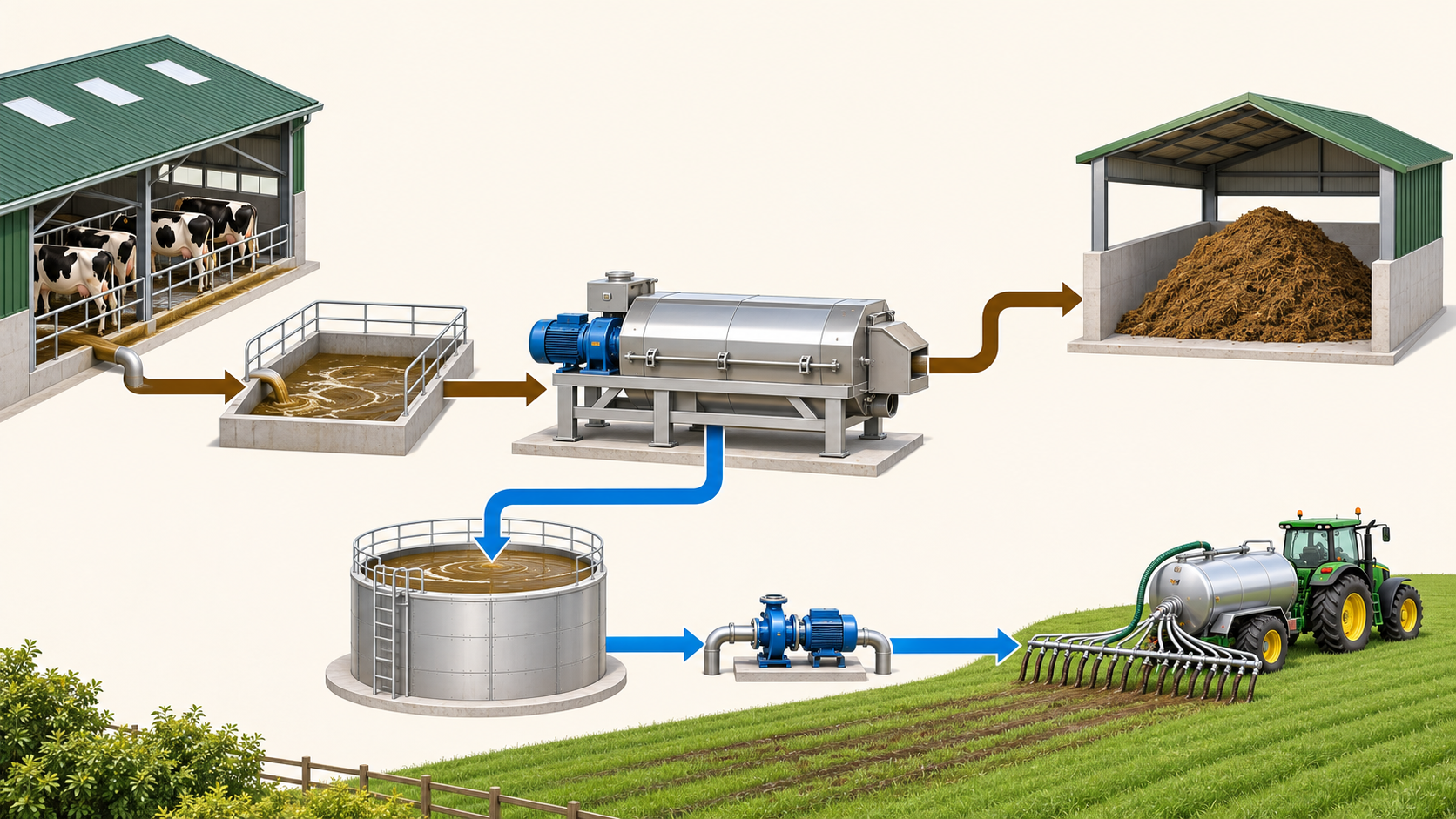
A screw press manure separator uses manure solid-liquid separation to split dairy slurry into a wet solids cake and a liquid fraction. For manure field application, verify three things before buying: the peak feed the press can handle, where the solids will go, and what the pump and applicator can handle after storage. Ask suppliers to demonstrate all three using slurry from your farm.
In its announcement for EuroTier 2026 in Hanover, Germany, Vogelsang discussed its XSplit Compact screw press alongside slurry application equipment. That pairing raises a practical question for farm managers and system designers: how do you specify a separator that fits the whole route from barn to field? DLG event announcement · Vogelsang exhibitor announcement
1. What reaches the press during peak collection?
Start with the collection method. A scraper may deliver slurry in batches, while a flush can send a short surge of more dilute material. Record the daily volume, the peak arrival rate and how long that peak lasts. Note the bedding type, visible long fibres and recurring debris such as stones or sand. Tell suppliers where the feed sample came from and how the pit was mixed before sampling.
Ask for sustained slurry separator throughput in cubic metres per hour at a stated feed total-solids range. If the press runs at a steady rate while the barn discharges in batches, use the collection schedule to size the buffer pit. Agree on any mixing or debris removal upstream of the press and include it in the trial setup.
2. Can the farm handle the separated solids every day?
For manure dewatering, choose the destination before setting a cake dryness target. Include manure solids handling in the equipment layout and operating budget. Solids headed for composting, off-farm hauling or further processing each impose different handling requirements. During the trial, weigh the wet solids collected over a timed run and measure their dry matter. Use the wet mass and planned operating hours to work out daily hauling or storage needs.
Check the discharge height and whether wet solids fall cleanly into a bin or transfer onto a conveyor without building up. Allow enough receiving capacity for days when hauling stops. If a loader normally clears the pile, verify that it can reach the discharge area while the separator is running.
3. Can the slurry pump and applicator handle the separated liquid manure?
Ask the pump and applicator suppliers what residual fibre and particle size their equipment can handle, and at what flow and pressure. Agree on a way to check oversize material, such as a screen test using an opening agreed with those suppliers. Take one sample at the separator outlet and another from the storage tank under the farm's normal mixing and draw-off conditions. A clear-looking outlet sample can still leave fibres or settled material that reach the pump later.
To assess slurry spreading, run the stored liquid where practical through the intended pump and distributor during the trial. Record flow, pressure, blockages and cleanouts, and check for uneven delivery across the outlets. Confirm storage for periods when field application is unavailable and use a representative liquid analysis to set application rates in your nutrient management plan.
What to send with a request for quotation
Send a one-page process sketch with the collection method, daily and peak flow, feed solids and bedding, solids destination, and the make or operating limits of the downstream pump and applicator. Ask each supplier to quote against the same slurry samples and to report sustained throughput, wet solids output, cake dry matter and liquid-side trial results together. This gives the farm a basis for comparing quotes and repeating the test at commissioning.
For equipment details, see the HUATAO HT200 manure separator and HUATAO HTNF-300 manure separator. Confirm model selection against your slurry trial and the requirements of your field application system.
Related products
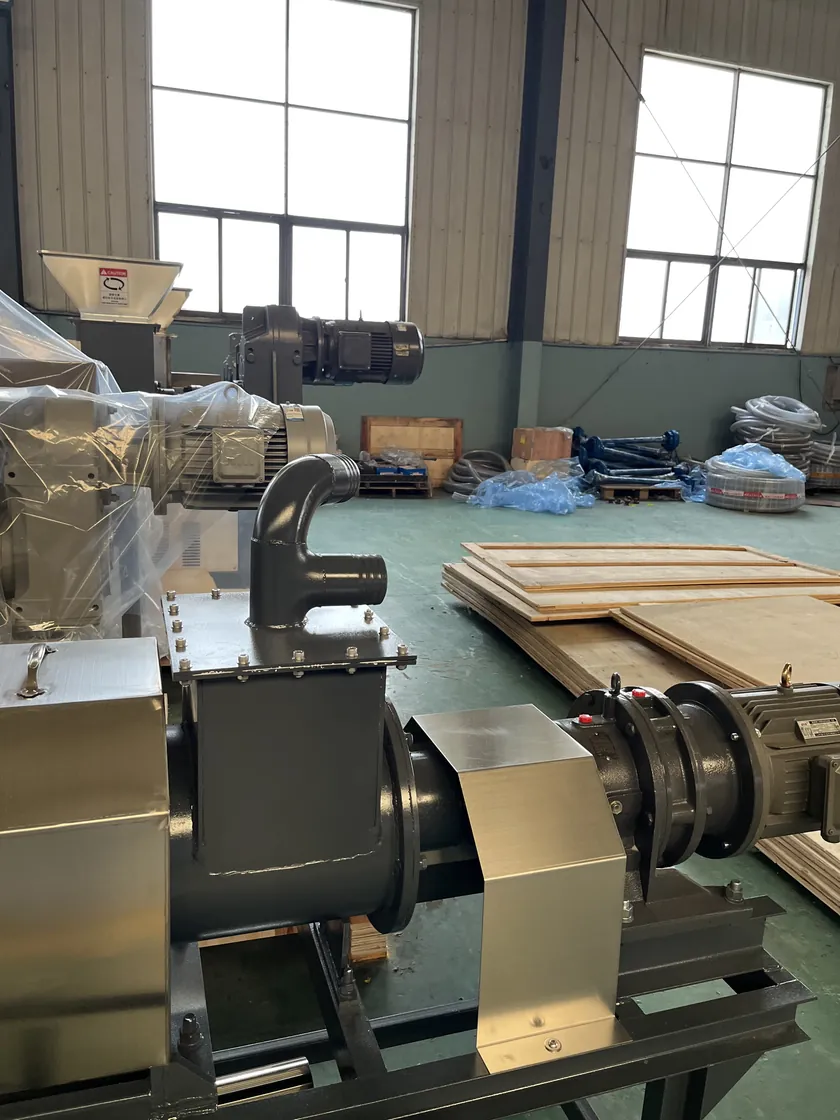 HT200HT200 is an automatic-feed manure separator with a 200 mm screen and a listed throughput of 10–20 m³/h. Confirm the feed and electrical configuration for your installation.
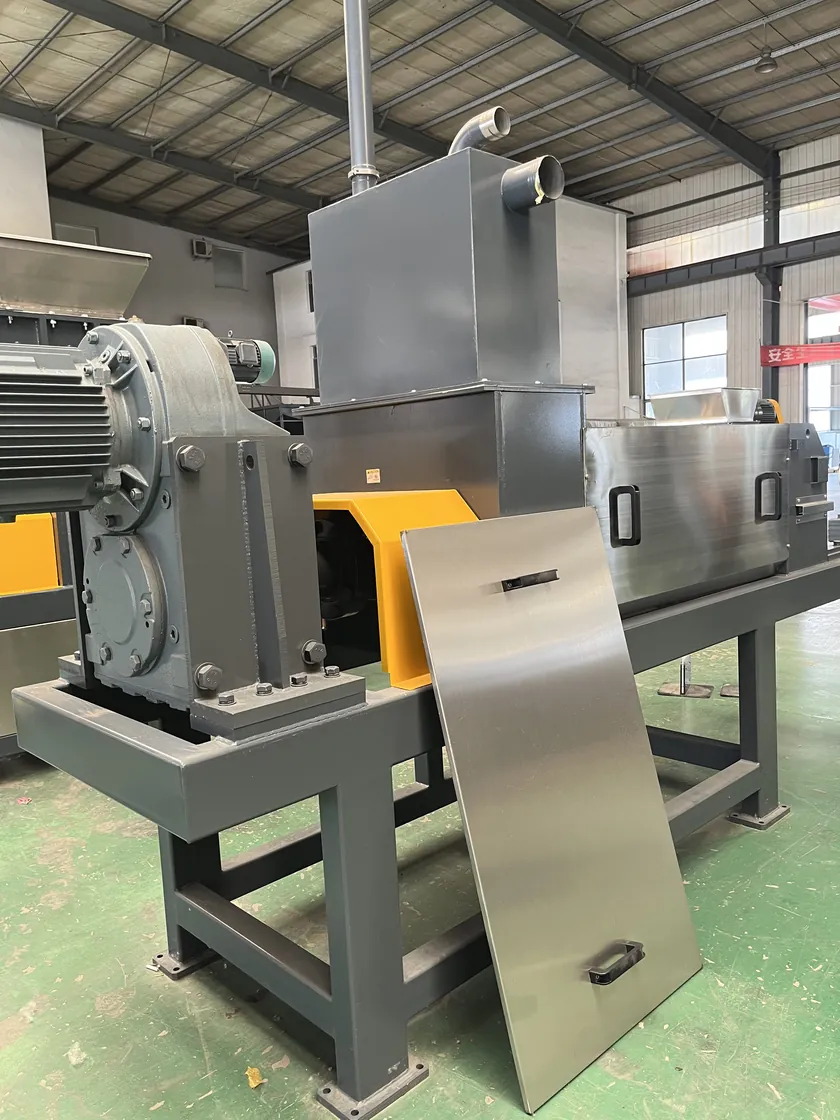 HTNF-300HTNF-300 is a manure separator with a 300 mm screen and a listed throughput of 15–30 m³/h. Confirm screen slots, installation clearances and the discharge target for your dairy slurry.